Showing posts with label Breeding Projects. Show all posts

Friday, December 13, 2013

Gorgeous Colors

We have had an amazingly colorful fall that just seems to go on and on......

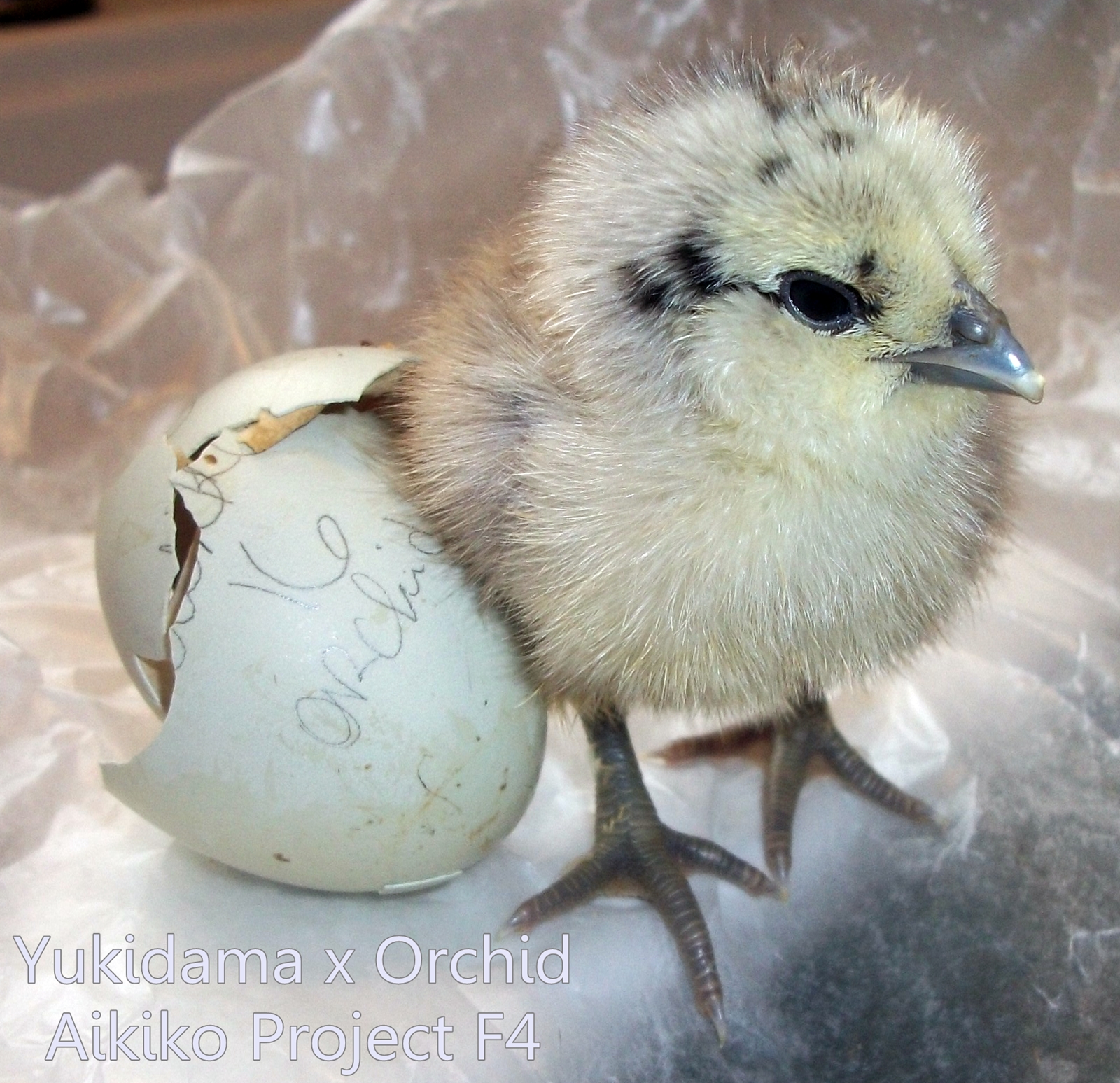
The Pirate Egg Projects are on track.  The challenge now is sorting out which pullet is laying which egg and then making decisions as to which birds to carry forward into the 2014 breeding programs.

Chocolate anyone? We've had a bit of confusion over how chocolate genes (both dun and sex-linked!) have infiltrated different project lineages and what to do about it.  I can't say I'm hating the look but I am having to do some test hatching to figure out what the heck we've actually got going on.

I've decided this is actually Zerya's first egg!
Zorie lays long thin blue eggs;
 ZERYA lays the olive eggs.
Zelda's eggs look just like her mother Orchid's;
alas...not shiny but definitely white pores on a pastel mint shell.
The rumpless girls have identical blue eggs.
Love the shine!


These are just some of my favorite pictures from this fall.  There are many more on the pinterest account.


Saturday, September 21, 2013

When in Doubt, Change Your Tune

I'm much more successful at finding information South American chickens online when I change my browser language settings from English to Spanish.  (We won't talk about how long that took me to figure out!)

How to Change Your Settings in Google Chrome

Since it took me two years to discover this trick I'm going to break it way down so that when I forget it won't take me another two years to remember. :)

Step 1 Click on the Chrome Settings icon in your browser toolbar


Step 2 Scroll down to the Languages section and click on "Language and input settings"


Step 3 Click on "Add"


 Step 4 Scroll down to "Spanish - Latin America"

Step 5 "Spanish - Latin America" and "Spanish" will get added to your list of languages. You have to drag them to the top for the search engine to prioritize sites written in Spanish.


Step 6 Click "Done" in the lower right corner and close the settings window.  

Thursday, August 1, 2013

Oona and Starry Night - rumpless, shiny blue egg layers

Oona and Starry Night are half-sisters.  Their momma, Rupa, is nearly rumpless. Their fathers are from a unique flock of birds thought to be composites of birds indigenous to South and Central America and the Pacific Isles. These girls are very small, slow to mature, and a bit more wild than a typical bantam. 
~*~*~*~*~*~
Oona spent last winter as a house pet in our sun room so she got to "help" unwrap presents Christmas morning.  She has dark skin and wild pattern plumage.  Her stint as a house pet has given her a prima donna complex but typically she is exceptionally silent.


Star is a few months older than Oona and she stayed in the Aikiko Project House over the winter. She carries the mottling gene and has the tell tale white dots and white skin.  Her brother, Xeryus, also carries the mottling gene but he has dark skin.  He is equally rumpless.  


It took Oona and Star both almost a full year to start laying.  This is consistent with my experience with the mother, "Rupa" and sister "Cerci".  It is interesting to note that Rupa's eggs are a rather pale, matte blue with a slight green tinge. All of her daughters lay shiny blue eggs without a hint of green.  


These girls are part of the Aikiko Project but the project is paused until fall.  The Aikiko Project is a hatching eggs / genetics learning collaboration. Participants contribute information about their hatches, help puzzle out the genotypes of project birds, and guide project development.  The project group currently functions using facebook, ancestry.com, and photobucket.  A dedicated website is being developed for the fall.   

Saturday, July 13, 2013

Birds of a Feather

See any family resemblance? 
I love this picture! Flame and Jackson are second cousins.  Their great-grandmother is Barbie, my ancient Barred Rock hen.

Barbie x Einstein ---> Rosie x Dora ---> TwoRoo x Rosie ---> Flame

Barbie x Celso ---> Jenny x Rex ---> Lulu x Jack Sparrow ---> Jackson

Jenny and Rosie are half-sisters so TwoRoo and Lulu are cousins.  Go figure! The first generation ended in long E sound; the second generation ended in "ou" sound.  Maybe I should go back to the drawing board on the third generation names....... Flamenco & Spare-O....hmmm, maybe I should think harder....

Friday, July 12, 2013

The Aikiko Project


The Aikiko Project was a counter top hatching eggs, chicken genetics learning collaboration for curious chickenistas (plus, those chicks are just pretty darn cute!).


March 2019 Life is as life goes.....   My Aikikos only live on in the many spin-off flocks people started by buying my hatching eggs, chicks, and birds.   Thank you to all who encouraged and supported the Aikiko Project.  -Alison
__________________________

July 12, 2013  The Aikiko Project is a hatching eggs / genetics learning collaboration. Participants contribute information about their hatches, help puzzle out the genotypes of project birds, and guide project development.  The project group currently functions using facebook, ancestry.com, and photobucket. A dedicated website is being developed for the fall.   


Wednesday, June 26, 2013

d'Uccle Flock

I have a small flock of "found" d'uccles. They seem to find me. :) This is just a purely fun pursuit with no project to speak of and no goal for improving my stock.  I hope that's not too blunt or disappointing for anyone but it's the truth.  I think they're adorable and as good a starter bird as any for backyard coops. Especially because, for such little things, they pack a powerful punch in terms of learning about genetics.


"Apollo" is a "lavender pattered isabel partridge". 

The white hen is named "Zinnia".  My best guess is she's a recessive white because it looks so clean and because I have yet to hatch any white birds..... 
The two mille fleurs are "Lizzie Pebbles" and "Laura Pebbles".  
Unpictured: "Astrid" is a porcelain hen who just joined our flock this spring.  
PS Lizzie Pebbles is one of our oldest birds - hatched in 2009, she's one of our special pets.


Thursday, June 13, 2013

Young Professor and the Willas


The Blue Wheaten Ameraucana hens (the Willas) are enjoying some time in the Rest & Respite Free Range flock. They seem to be quite happy so I'm going to hold off on segregating them with the purebred Blue Wheaten Ameraucana rooster (Will).


The Rest & Respite Flock protector, "Young Professor", is a purebred (but a non-standard color) Ameraucana with a pleasant temperament and excellent gentlemanly manners. He is much more consistent with the demeanor I need for my flock. Both his father and grandfather were superior flock protectors who the girls would rather follow than hide from.

My best guess-timate is that Young Professor is genetically a blue partridge/brown with multiple melanizing forces. Based on my genetics calculator tinkering I suspect the offspring will appear to be wheaten. The blue genetics mean there could be blue, black, or splash feathering.  (genetic code calculation)


The Rest and Respite Flock, June 2013


Monday, May 13, 2013

Chicken Soup Magic

An ad I wrote last spring for our processed chicken..... at the time we were getting $6/lb on the regular birds and $9/lb on the dark birds.  -AR

Free-range heritage breed and dark flesh chickens locally grown and processed for your culinary creations. This will not be a typical grocery store eating experience! 

These are extra roosters from hatches last fall. We've been tinkering around with ways to increase carnosine (ie chicken soup magic) in meat birds. There's a relationship between darkness of flesh (melanin levels) and carnosine levels but the challenge is the birds with the highest (by far!) carnosine levels also happen to be small....as in silkies. While we're waiting for the research to tease apart all the different aspects to fibromelanism, we're exercising a bit of homegrown selective breeding - on behalf of chicken soup lovers wherever they may be 

Dark flesh chickens have a slightly different flavor and have high levels of taurine and carnosine - ie "chicken soup magic".  Information about cooking heritage meat is below.

We hatched these birds and then fed and watered them daily for the last 5 months - trudging through wind and sleet snow, pouring rain and deep mud. They've slowly grown eating a diet of hand blended whole grains through the winter and wandering about eating tender grass and dandelion greens (and the occasional tasty worm) this spring. When the time was right the birds were taken to a small USDA inspected, family operated processing facility in Garnett, Kansas

I typically squeeze 3 meals of of each bird - baked chicken for meal 1, pulled chicken for casseroles for meal 2, and a rich soup made from thick chicken jelly for meal 3, plus several quarts of high quality broth for comfort food.  

Cooking traditionally raised chickens is different from cooking with industrially raised hybrid broilers. Recommendations from Heritage Chef Steve Pope

The US Ark of Taste is a catalog of over 200 delicious foods in danger of extinction. By promoting and eating Ark products we help ensure they remain in production and on our plates. http://www.slowfoodusa.org/index.php/programs/details/ark_of_taste/

Slow Food KC http://www.slowfoodkc.org/


Sunday, April 14, 2013

Chocolate and Mauve Rocks


The chocolate gene is so fresh to the United States and that my top priority right now is to simply get the gene introduced into the rock project flocks.  Chocolate is a sex-linked, recessive trait.  (This is NOT the dun gene - that's a totally different beast all together :)

My chocolate gene was derived from an outcross to an English Bantam Chocolate Orpington from Marc Sacre.   At this point the eggs I'm selling are out of a split to chocolate rooster (Rolo) over blue rocks, blue barred rocks, and a black rock.  

Genetic considerations: 1) The chocolate gene is sex-linked and recessive. Only the female offspring have the potential to have a chocolate phenotype. 2) The barring gene is sex-linked and dominant. 3) The blue phenotype is a heterozygous genotype.  Homozygous black and homozygous splash are also possible combinations.

The birds currently in the Project House  include:
* Barred rooster split to Chocolate
* Black Rock pullet
* Blue Rock Project hens & pullets
* Blue Barred Project hens & pullets


Outcomes from Split to Chocolate Rooster x Black Rock pullet


The chocolate gene is a sex-linked recessive trait. Males must need two copies of sex-linked traits in order for the presence of the gene to show. Therefore, some of the males may be carrying a copy of the gene but it does not show. Barring is a sex-linked dominant trait.  Males only need one copy of the gene to appear barred but there will be errant solid feathers.  


Outcomes from Split to Chocolate Rooster x Blue Rock pullet
All of the above plus:


Outcomes from Split to Chocolate Rooster x Blue Barred Rock hens

Both of the above sets of outcomes but the barred roosters will have 2 copies of the barring gene so the barring will be more consistent.